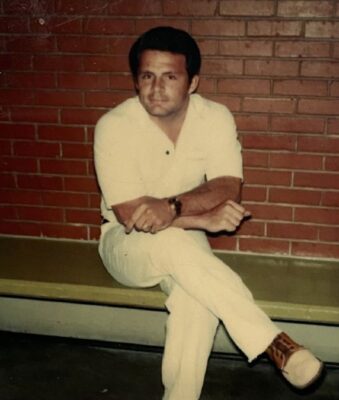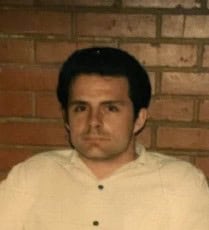
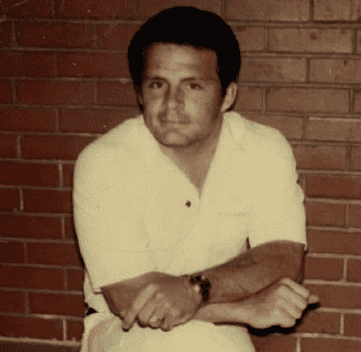
On November 3, 1986, the skeletal remains of an adult male were discovered on a ranch west of Interstate 25, in southern unincorporated El Paso County. Following the discovery, the El Paso County Sheriff’s Office conducted a search of the area and located remnants of clothing and a belt near the remains.
The El Paso County Coroner determined the man had been shot in the head, and the manner of death was ruled a homicide.
Since 1986, the Sheriff’s Office has devoted significant time and resources in an effort to link the remains to known “missing persons” from across the country.
Using the individual’s skull, a forensic artist created a facial reconstruction, which was publicly distributed in hopes someone might recognize him. The victim’s DNA profile was uploaded into the Combined DNA Index System (CODIS), but no matches were identified over the years.
With no identification and few investigative leads, the man’s identity remained unknown for nearly four decades.
In 2025, detectives with the Sheriff’s Office Investigations Division Cold Case Unit contacted the Ramapo College Investigative Genetic Genealogy (IGG) Center, located in Mahwah, N.J. After evaluating the case, Ramapo College offered its assistance, including laboratory and genealogical resources, to help identify the man.
Astrea Forensics developed a single-nucleotide polymorphism (SNP) DNA profile from the unidentified man’s teeth. The Ramapo College IGG team then used publicly accessible genealogical databases to identify potential relatives and construct the victim’s family tree.
Through this research, investigators identified potential relatives and developed a likely identity for the remains: 31-year-old Peter Joseph Paskovich Jr.
Detectives subsequently located the man’s relatives and obtained DNA samples for comparison. In April 2026, the Colorado Bureau of Investigation confirmed the relatives’ DNA matched the skeletal remains, verifying they belonged to Mr. Paskovich.
The investigation determined Mr. Paskovich had ties to Colorado Springs, as his father served in the US Air Force and was stationed at what was then known as Ent Air Force Base. Additionally, Mr. Paskovich was a member of Cub Scout Pack 173 and attended Widefield High School before his family relocated to San Antonio, Texas. He was confirmed to be in the Colorado Springs area in October of 1985. Additionally, Mr. Paskovich had ties to Clark County, Nevada, and Valencia County, New Mexico.
“This case is a powerful reminder we never stop seeking the truth, no matter how much time has passed,” said El Paso County Sheriff Joseph Roybal. “For nearly four decades, this man had no name, but he was never forgotten. My Detectives remained committed to finding answers, and through advances in investigative genetic genealogy and strong partnerships, we are finally able to restore his identity as Peter Joseph Paskovich Jr.
“We are grateful to the organizations and experts who assisted in this effort, and most importantly, we hope this brings a measure of closure to Mr. Paskovich’s family. While identifying him is a significant milestone, our work is not done. We remain dedicated to pursuing justice and determining the circumstances surrounding his death.”
Without the advancements in DNA testing and genetic genealogy, Mr. Paskovich would never have been identified. Funding for this testing and identification process was provided by the Ramapo College IGG Center.
“This identification demonstrates the strength of collaboration between law enforcement, academic institutions, and the public whose DNA is critical to investigations utilizing investigative genetic genealogy,” said Cairenn Binder, Assistant Director of the IGG Center. “Although Mr. Paskovich’s family tree was complicated by recent immigration and low genetic associations, our team was able to help restore his name after nearly four decades as a John Doe. We thank the members of the public who facilitated his identification through a public genetic genealogy database, ultimately helping to provide answers to families who have waited years for resolution.”
Currently, GedMatch and FTDNA allow users to “opt in,” allowing law enforcement agencies and those working on behalf of law enforcement to use their family trees to identify violent-crime offenders. These uploads also assist in identifying unknown human remains. Since 2018, approximately 75 cases in Colorado have been solved using FIGG.
Although Mr. Paskovich has been identified, this case remains a homicide investigation. Detectives believe Mr. Paskovich was killed between July and December of 1985.
“For nearly 40 years, our family lived with unanswered questions and an unimaginable sense of loss,” stated Richard Paskovich, the victim’s brother. “While nothing can bring Pete back, we are deeply grateful to everyone who refused to give up on him. Having our brother’s identity restored brings us a measure of peace.
“We want to thank the investigators, forensic experts, and all those who worked tirelessly over the years to help bring Peter home to us. We continue to hope the truth surrounding his death will come to light, and ultimately, justice will be served.”
The El Paso County Sheriff’s Office would like to extend their thanks to the El Paso County Coroner Office and the Colorado Bureau of Investigations in delivering the necessary information and evidence to Astrea lab; to Detective Ryan Tovar of the San Antonio Police Department for assisting in obtaining Paskovich’s relatives’ DNA samples; and to the many investigators throughout the years who worked tirelessly in trying to identify Peter Paskovich Jr.
Sheriff’s Office Detectives and the El Paso County Coroner’s Office will work with the family to have Mr. Paskovich’s remains returned to them.
Anyone who knew Mr. Paskovich is asked to contact the Sheriff’s Office tipline at 719-520-7777 or Pikes Peak Area Crime Stoppers at 719-634-7867. Anonymous tips may also be submitted through Pikes Peak Area Crime Stoppers online HERE.
The El Paso County Sheriff’s office extends its sympathies to Mr. Paskovich’s family and is committed to seeking justice to identify the person or persons responsible for his murder.